1
0
Other
The Minimalist Tech Era: Why Gen Z designers are obsessed with clean interfaces
Gen Z grew up in a world that’s always on. Between constant notifications and endless content, they have llearned to filter noise better than any generation before them. And that’s showing up in design. It’s not just about clean layouts or white space anymore,it’s about mental space. The kind that makes you breathe a little easier when you look at something. Gen Z’s take on simplicity blends tech, psychology, and creativity in a way that feels both intentional and human.
Umama AliDec 9, 2025
Leadership in Software Development Is More than Code
Understanding the Minimal Tech Era
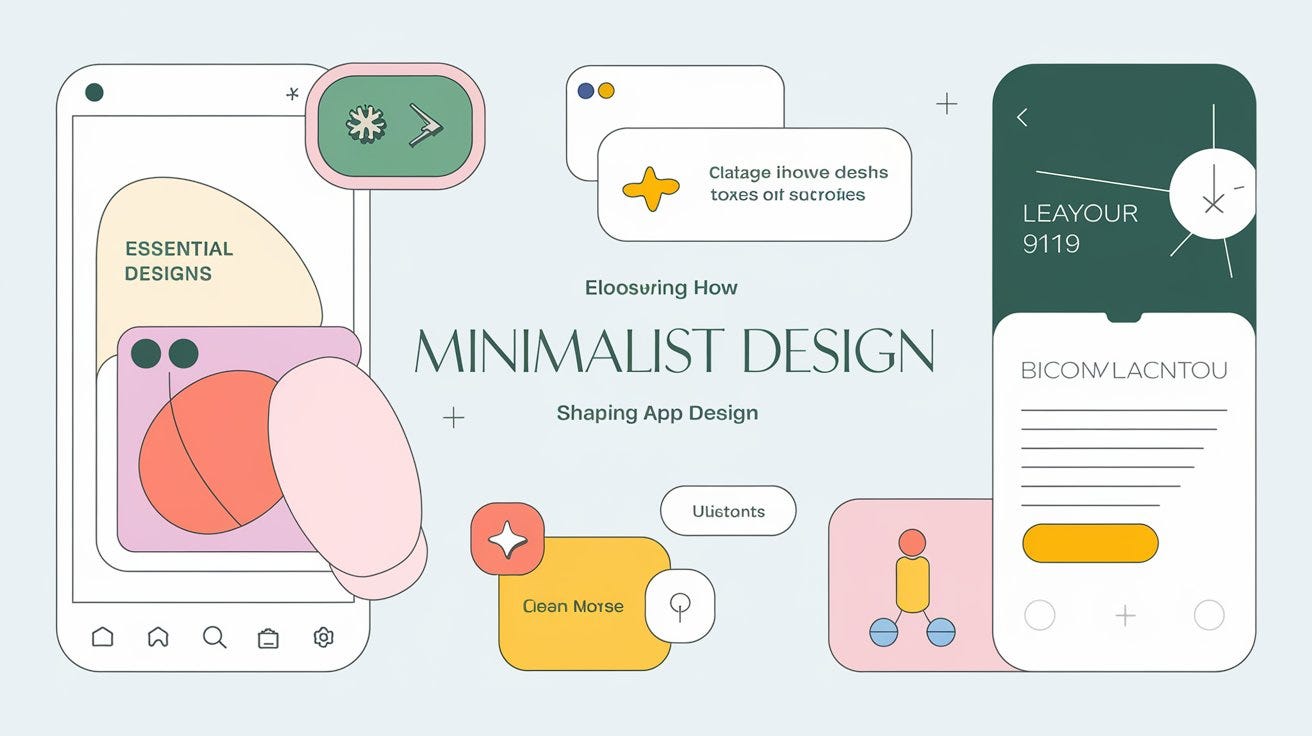
Minimalism in design is no longer about doing less. It is about doing what matters most.
In today’s digital world, clean interfaces are more than a visual trend, they are a psychological response to digital saturation. The interfaces Gen Z designers are building represent a shift in how we think about clarity, cognition, and control.
Minimalist design is not the absence of creativity. It is the discipline of choosing what stays and what goes. This approach connects deeply with human behavior, especially our brain’s need to process information easily and avoid mental overload. According to the Nielsen Norman Group, users experience greater cognitive fluency when visual complexity is reduced (NNGroup, 2023).
How Psychology Explains the Gen-Z
My background in psychology makes it impossible not to miss the behavioral side of this trend. Gen Z designers are not avoiding detail; they are chasing focus. A clean interface does more than look good, it reduces decision fatigue. Every visual cue feels intentional. The space feels calm, not empty.
It is similar to how meditation works. You are trained to stay with the present moment, to pay attention to one thing at a time. Minimalist design does the same, it guides the user toward one primary action, one clear path.
This generation has grown up in an endless digital feed, yet they are choosing to slow down their design language. The result is a calmer, more thoughtful internet.
Lessons from the Intersection of Design and Technology Design and Technology
My experience across creative and tech spaces has shown that the most impactful designs live where aesthetic simplicity meets technical precision.
A good interface feels natural because it reflects human thinking patterns. When developers and designers align on minimalism, the outcome is not just beautiful, it is efficient.
For example, simplified UI frameworks improve usability scores and accessibility compliance (Medium Design Bootcamp, 2024). Clean design is faster to load, easier to maintain, and kinder to both the user and the engineer.
The real art is in designing less without feeling empty.
The Shift from Digital Noise to Calm Interfaces
DIGITAL OVERLOAD
SELECTIVE FOCUS
MINIMAL DESIGN
CALM EXPRIENCE
DIGITAL OVERLOAD
SELECTIVE FOCUS
MINIMAL DESIGN
CALM EXPRIENCE
Core Principles of Minimalist UX and UI
- Clarity Over Decoration : Minimalism is not about colorlessness. It is about contrast, hierarchy, and message clarity. A strong font, one accent color, and balanced white space communicate more powerfully than a crowded palette.
- Intentional Hierarchy: Not every element deserves the same visual weight. Good minimalist design leads the eye ,it tells users what matters most.
- Cognitive Ease: When the brain encounters simple, organised layouts, it feels effortless. That sense of ease builds trust and satisfaction. It is design working in harmony with psychology.
- Function as Aesthetics: The beauty of minimal design often comes from function, perfect alignment, balanced spacing, and responsive behavior.
Why Gen Z Is Leading the Shift Leading the Shift
- Digital Fatigue: Gen Z lives in overstimulation. Minimalist design is a rebellion against endless pop-ups, notifications, and ads. It offers mental relief.
- Authenticity and Transparency: Gen Z values honesty and purpose. Their designs avoid manipulation and embrace clarity, what you see is what you get.
- Accessibility and Inclusion: Simpler layouts often improve readability, navigation, and inclusivity for users with disabilities. Minimalism and accessibility go hand in hand.
- Portfolio Culture: The rise of personal branding means every designer’s work lives online. Clean, sharp designs are easier to showcase and easier to remember.
- Tech Literacy: This generation understands frameworks, responsiveness, and load speed. They build lean because they think lean.
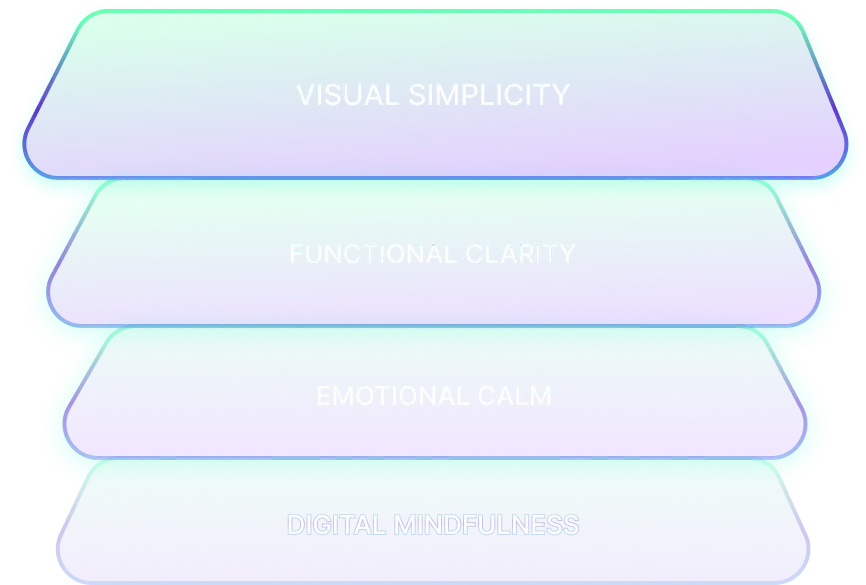
Layers Of Minimalism
.webp)
What the Minimalist Future Looks Like
The future of minimalism is not silent or plain, it is adaptive. As AI and automation advance, interfaces will become context-aware, adjusting complexity depending on who is using them.
Designers are already experimenting with expressive minimalism, merging simplicity with emotional depth. A single motion, gradient, or hover can express identity without clutter. According to UX Design CC’s 2025 trend forecast, micro-interactions are the emotional backbone of next-generation minimalist design (UXDesign.cc, 2025).
Bringing It Back to the Human Element
Behind every design choice is a person trying to make technology feel human again. Clean interfaces give people time to breathe, think, and connect. Minimalism is empathy translated into visuals.
When users feel calm, they stay longer. When design stops shouting, users start listening.
That is what makes Gen Z’s minimalist movement not just a style, but a statement
Conclusion
Minimalism in design is not about removing things. It is about revealing meaning. Gen Z designers are showing us that simplicity is not a lack of creativity but the highest form of control.
The future of UX 2025 will not be defined by more features, but by more clarity. And that clarity will come from those who understand both how humans think and how technology behaves.
As a designer with a psychology and tech lens, I believe the minimalist tech era is not ending anytime soon. It is just beginning to find its purpose.