0
0
Building a white-label reseller program for a hosting platform
A hosting company we build for wanted agencies reselling its hosting. The usual way is contracts, discount spreadsheets and hand-built accounts, a channel that scales exactly as fast as the person running it. We built the whole reseller lifecycle as software instead, from a live pricing calculator to a fully white-labelled panel on the reseller’s own domain. Here is how, and why it works.
ByteShiftedJul 21, 2026
A wholesale channel that onboards, bills and brands itself.
The problem: a channel trapped in manual work
The company’s platform already provisioned hosting automatically, a customer checks out and a live, isolated environment exists minutes later. Growth had a second engine waiting: agencies and IT companies who wanted to resell that hosting to their own clients.
But a reseller channel run the usual way is a manual one. Someone negotiates each discount, someone drafts each contract, someone creates every end customer’s account by hand. And the partners who want their own brand mean DNS and server work for every custom domain. The channel scales exactly as fast as the person running it, which is to say, it does not.
The decision: make the channel a product
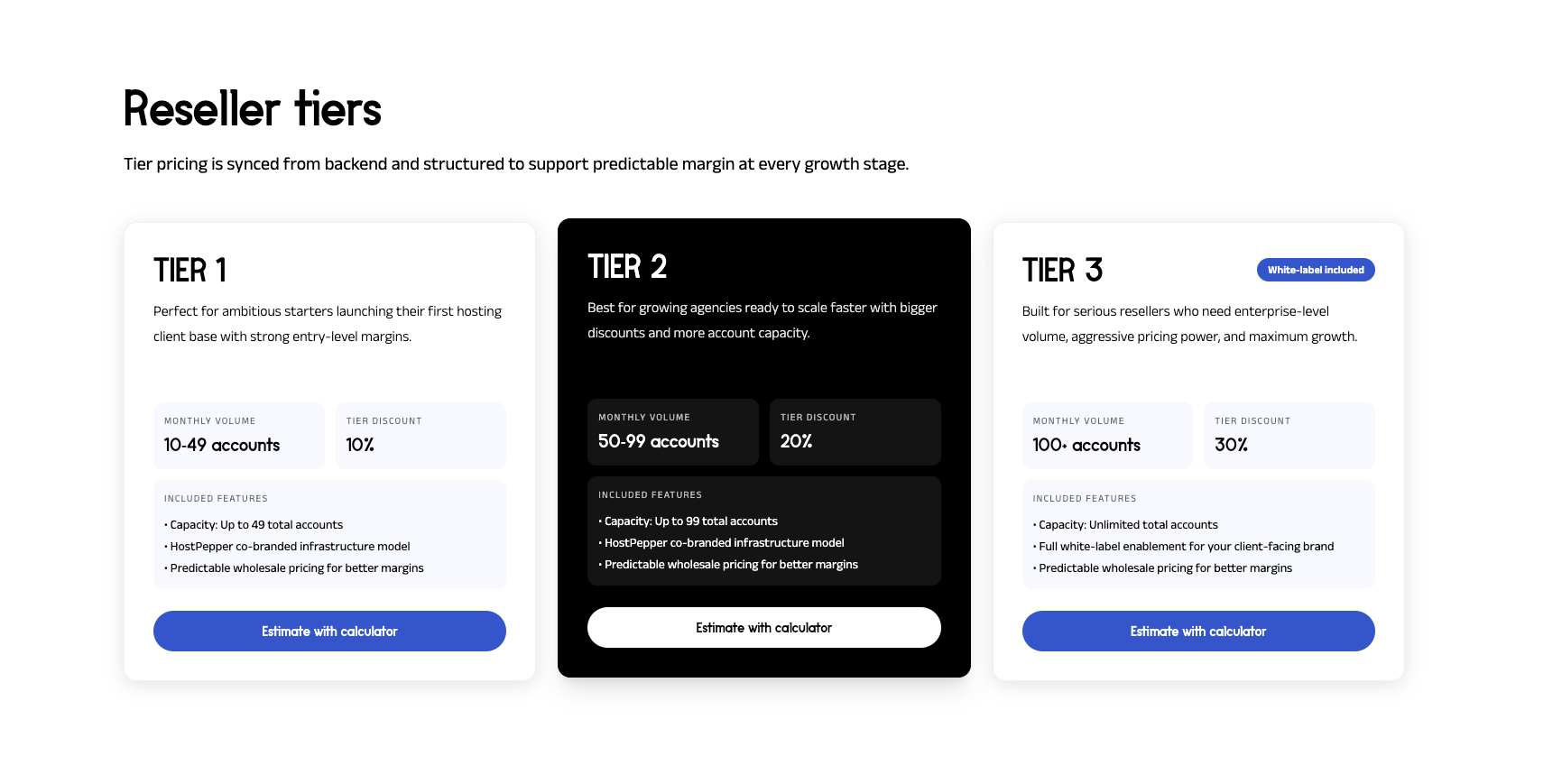
Instead of hiring that person, we built the lifecycle as software. Three reseller tiers with volume discounts that grow with the partner’s account count, priced openly instead of negotiated in the dark.
The application is self-serve. A prospective reseller picks a tier and builds their package mix in a live pricing calculator, watching the discounted summary update as they go, so the wholesale economics are clear before anyone talks to sales. The agreement goes out for digital signature, and the moment it is signed the platform provisions the reseller’s account, pricing and quotas. No paperwork changes hands.
From interested to selling
Pick a tier
Live pricing calculator
Sign digitally
Agreement out and back
Auto-provisioned
Pricing, quotas, account
Selling
Same week
Pick a tier
Live pricing calculator
Sign digitally
Agreement out and back
Auto-provisioned
Pricing, quotas, account
Selling
Same week
Running customers against a quota
From there the reseller works out of their own area in the control panel. They create customers and assign hosting products against their tier’s quota, and every one of those customers gets the same automated provisioning as a direct customer of the platform, a real, isolated environment, minutes after creation.
Billing is consolidated through Stripe, one relationship per reseller rather than hundreds of small invoices, with grace periods, automatic suspension for non-payment, and paid tier upgrades from inside the panel. The business logic that usually lives in a spreadsheet lives in the product.
The part everyone forgets: the exits
Reseller programs are designed for the happy path. The hard questions show up when a reseller leaves. Whose customers are they? What happens to their websites?
We built the exits as deliberately as the entrances. If a reseller leaves, the platform migrates their customers to direct billing or winds them down cleanly, with every affected customer notified. Nobody’s website disappears because a middleman churned. That single design decision is what makes the program safe to scale.
The top tier: their brand on the door
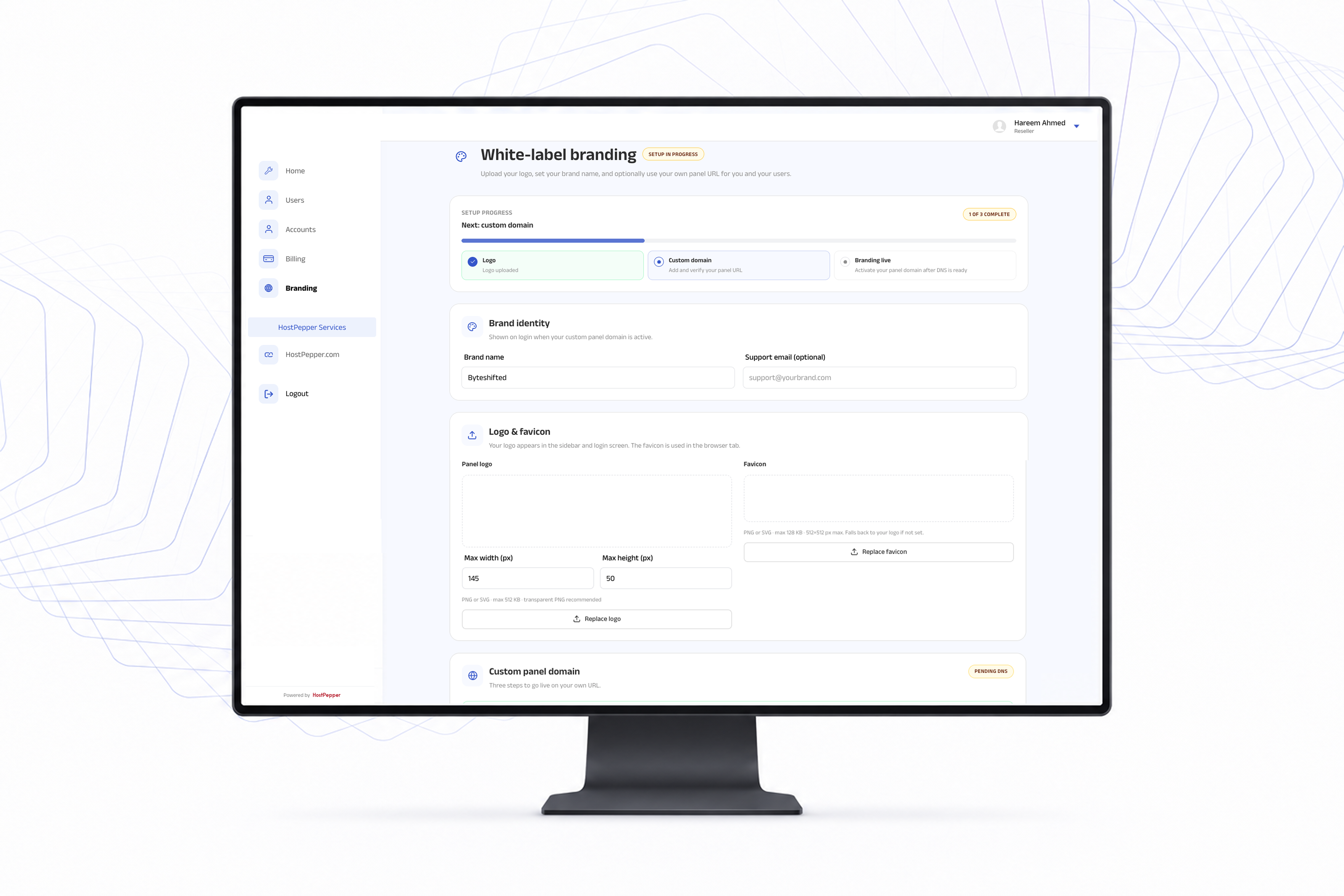
The highest tier unlocks the real prize. A reseller uploads a logo and favicon, sets a brand name and support email, and their customers see their hosting company, not the platform underneath. Transactional emails carry the reseller’s identity, and the panel resolves the right branding before anyone even logs in.
It goes all the way to the address bar. The reseller enters their own panel domain, and the platform creates the DNS zone and records, verifies the delegation, provisions the domain on the panel infrastructure and tracks it through a status flow they can watch, with a clean teardown when a domain comes down. White-label as a self-serve feature, not a professional-services project.
One platform, many tiers
What a reseller program needs to be a product
- Open, tiered pricing with a live calculator, so economics are clear before the first call.
- Digitally signed agreements that activate the account automatically on signature.
- Quota-managed sub-accounts with the same automated provisioning as direct customers.
- Consolidated billing with grace periods and automatic suspension, not invoice chasing.
- Clean off-boarding that migrates or winds down customers when a partner leaves.
- White-label branding and a custom panel domain the platform provisions and verifies itself.
Why it works
The program is really two products in one. A simple wholesale channel for agencies that just want better margins, and full white-label infrastructure for partners who want to be the hosting company. Both run on the same platform, and neither needs the platform’s own team in the loop for onboarding, provisioning or billing.
That is the general lesson, and it applies well beyond hosting. If a growth channel depends on a person doing manual steps, it is not a channel yet, it is a job. Build the lifecycle, including the exits, and partners can onboard themselves while the team’s time goes to the partners, not the paperwork.