0
0
Why we reach for Stripe on almost every project
We have wired payments into a lot of products, and when a new one needs to take money, we reach for Stripe by default. Not out of habit, but because the API, the docs and the primitives keep being the right tool. Here is what Stripe actually gets right, and how we use it, from provisioning real infrastructure to paying real cash out through Connect.
ByteShiftedJul 21, 2026
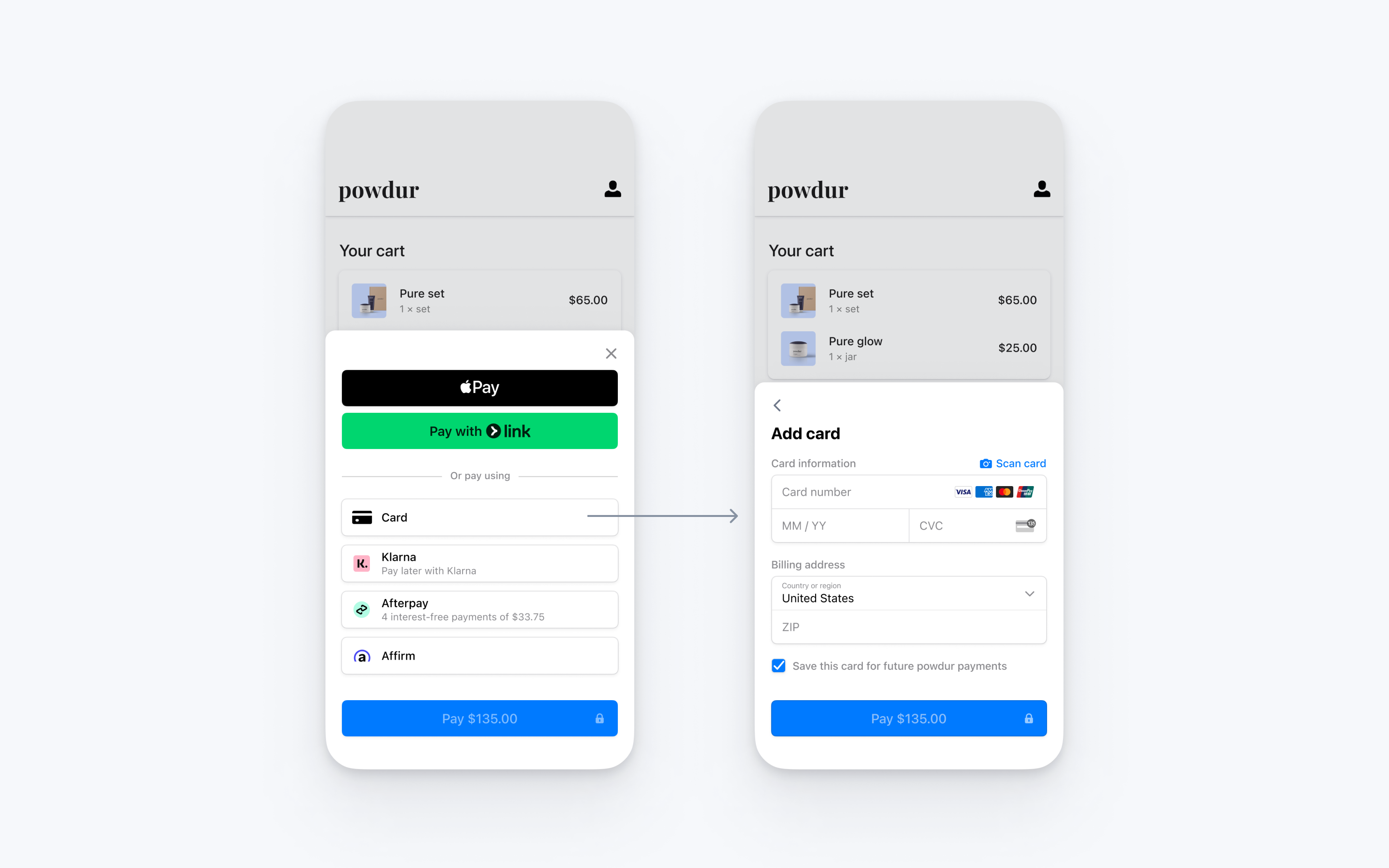
The payments tool that keeps earning its place, project after project.
The docs are the product
The first thing any engineer notices about Stripe is the documentation, because it is genuinely excellent, and that is not a small thing. Payments are full of edge cases, currencies, tax, disputes, retries, partial refunds, failed charges, and the difference between a good docs site and a bad one is whether you find the edge case before your customers do.
Stripe's docs are precise, they show the exact request and response, and they are honest about the hard parts. Working examples in real languages, a test mode that behaves like production, reference material you can navigate. We spend less time guessing and more time building.
The API is designed, not accreted
Good API design is invisible when it works and infuriating when it does not. Stripe's API feels designed. The objects map to how you actually think about money, a customer, a product, a price, a subscription, a payment intent, and they compose the way you expect.
Small decisions compound. Idempotency keys are built in, so you can safely retry without charging twice. Versioning is explicit. Errors are typed and specific, so your code reacts to "card declined" differently from "network blip". These make a payments integration boring in the best possible way.
Webhooks: the source of truth
The single most important habit Stripe pushes you toward is trusting the webhook, not the browser. When a customer checks out, the redirect back to your success page is not proof of anything, they can close the tab, the network can drop, the redirect can fire early. The event Stripe sends your backend, server to server, is the fact you build on.
We design every serious integration around this. The webhook starts the real work; the success page is a status view that reports it. Stripe delivers events at least once, so every handler is idempotent and a repeat delivery quietly agrees with the first.
How a paid purchase actually flows
Checkout
Customer pays
Webhook
Server-to-server event
Background job
Provision, idempotent
Ready
Live account or server
Checkout
Customer pays
Webhook
Server-to-server event
Background job
Provision, idempotent
Ready
Live account or server
In practice: provisioning infrastructure
The clearest test of the webhook-first principle is a product where a purchase creates something real, a server, a mailbox, a live account. The payment is not the end of the story, it is the trigger for one, and the redirect the customer sees is never proof, so the server-to-server event is what starts the work.
When that event lands we do the smallest synchronous thing, record the purchase, and hand the real build to a background job so the customer never waits on infrastructure. Every step is idempotent and keyed to the payment, so an at-least-once retry finds the work already done. And because real infrastructure hiccups, the jobs retry with backoff, so a paid customer never ends up with nothing.
In practice: a wallet that pays real cash
The other place Stripe earns its keep is when money moves the other way, out to a customer. We have built referral programs that pay real cash, a shared code, a first-purchase discount, and a reward earned only once the referred customer has genuinely spent, into an in-app wallet they can spend against their bill or cash out to their bank.
Two disciplines keep it honest. The same idempotency we apply to payments, applied to rewards, gated on real spend, self-referral blocked, every reward counted once. And the wallet is a ledger, not a balance field, so it is always auditable. Cashing out is real money leaving for a bank, and that is exactly what Stripe Connect owns, the payout rails plus the identity and compliance checks around paying an individual.
Webhook-driven, idempotent, ledger-backed

It scales from a checkout to a platform
The reason Stripe fits so many projects is that it does not top out. A one-off checkout, a subscription platform with consolidated billing, a checkout that provisions a server, a wallet that pays out through Connect, these are the same toolbox, just more of it. The mental model does not change as a product grows up, it extends.
That continuity means the payments knowledge we build on one project carries to the next. Trust the webhook, stay idempotent, model money as a ledger, read the events back, the same patterns whether we take one payment or run billing for thousands of accounts.
The honest caveats
No tool is free of trade-offs. Stripe is not the cheapest processor on fees, and if raw rate is all that matters, that is a real conversation. It is a dependency, so we design so our own record of what a customer bought is authoritative and Stripe is the processor, not the sole memory. And the surface is large, you can wire it naively and get it wrong, which is why the discipline above matters.
None of that changes the conclusion. For the vast majority of products that need to take money and do something real when they do, Stripe is the fastest path to a correct, maintainable integration.
The primitives we keep using
- Checkout and Payment Intents for taking money, with strong authentication handled for us.
- Subscriptions and invoicing for recurring products, with grace periods, retries and proration.
- Webhooks as the source of truth, driving the real work behind every purchase.
- Idempotency keys so retries are always safe, on charges and on the work we do in response.
- Connect when money has to move out to someone else's bank, with the compliance around a payout.
- Test mode and clear error types so we prove the hard paths before a real card is involved.
The short version
When a new project needs payments, we do not relitigate it every time. We reach for Stripe, wire it around the webhook, keep everything idempotent, and let the docs carry us through the edge cases. It is one of the few dependencies that has earned that kind of default, and it earns it again on each project we ship.