4
8
Other
Navigating through leadership in software development : lessons from the inside
Discover insights shaped by years inside IT setups. A reflection on leadership, culture, and responsibility in software development, written from experience across projects, people, and systems.
Ahmed HassanDec 11, 2025

Leadership in Software Development Is More Than Code
Understanding Thought Leadership in Software Development
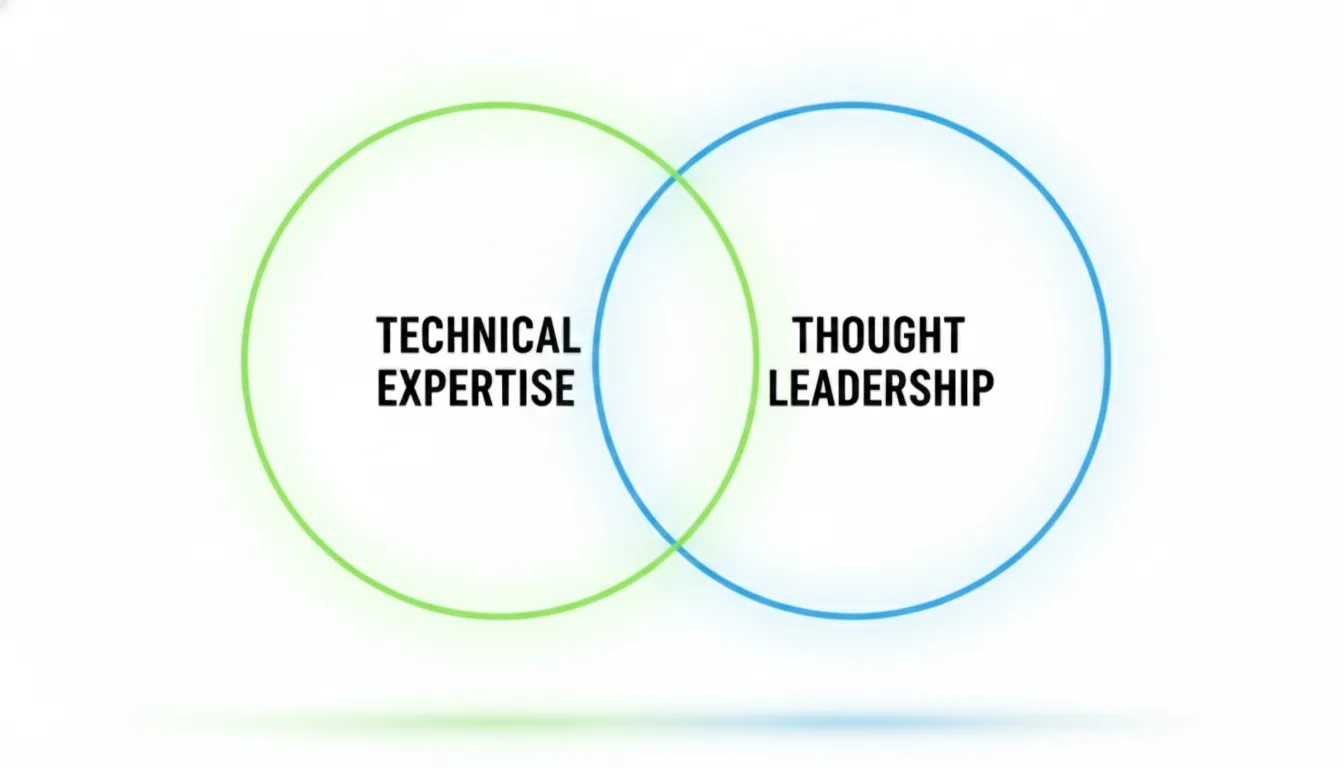
Thought leadership is not about titles or job roles. It is about perspective, influence, and responsibility in shaping how teams think, work, and grow. In software development, thought leadership is less about being the loudest voice in the room and more about being the person who can connect strategy with execution, and people with purpose.
What makes thought leadership different in our industry is the balance between technical accuracy and human clarity. A leader must understand frameworks, workflows, and emerging trends, but also how these choices ripple through teams and organizations. It is one thing to decide on a new tool, but it is another to understand how it affects collaboration, hiring, training, and long term delivery.
In the fast moving world of technology, real thought leadership is about slowing down enough to ask the right questions: Why are we building this? Who are we building it for? And how can the way we work today set us up for resilience tomorrow?
Lessons from My Path into IT
My perspective has not been built from writing code line by line, but from being inside the technical IT ecosystem where code, people, and business meet. I began in HR, where I saw firsthand how talent is brought into teams, how culture is shaped, and how the wrong fit can slow down even the most technically capable group.
From there, I stepped into project management, where I learned to navigate the reality of deadlines, resource constraints, and the invisible pressure that comes with coordination. A project is not only a collection of tasks. It is a test of communication, foresight, and trust.
Over time, I worked closely with IT setups, helping organizations find the right engineers, shaping processes, and supporting leadership in aligning their technical vision with business goals. In recruitment, I have seen how hiring decisions are often the first brick in the wall of thought leadership. The way a team is built decides not only how it delivers but how it learns.
This journey taught me that leadership in software is not confined to architects or senior engineers. It belongs to anyone who can see both the human and technical side of the work, and who is willing to take responsibility for connecting them.
Why This Matters for Business Leaders
For business leaders, thought leadership in software development is not optional. It is a necessity. The choices made in development spreads through entire organizations. The examples of those choices flow like rivers among the people. A weak process leads to delayed products. A short sighted culture leads to high turnover. An absence of leadership creates an absence of accountability.
Leaders must see that software is no longer just about building systems. It is about shaping ecosystems. Every workflow, every sprint, and every deployment touches on efficiency, cost, and trust. A leader who ignores the technical ground, risks losing control of the business direction itself.
Thought leadership is what keeps strategy honest. It brings alignment between the boardroom vision and the day to day execution inside engineering teams. Without it, organizations end up building faster but going nowhere.
The Leadership Chain: From Curiosity to Growth
Individual Insight
Curiosity, Clarity, Responsibility
Team Influence
Communication, Example
Cultural Alignment
Shared Value, Consistency , Trust
Organizational Impact
Efficiency, Retention, Growth
Individual Insight
Curiosity, Clarity, Responsibility
Team Influence
Communication, Example
Cultural Alignment
Shared Value, Consistency , Trust
Organizational Impact
Efficiency, Retention, Growth
The Human Side of Development Development
The industry often talks about code quality, frameworks, or cloud infrastructure. But behind every decision is a team of people. Thought leadership begins with understanding that technology is built by humans, and humans need more than tools to thrive.
My years in people ops and HR showed me the cracks that appear when organizations treat developers as replaceable. Retention drops, communication breaks, and culture becomes fragile. The opposite happens when leaders invest in mentorship, clarity, and meaningful recognition.
A thought leader pays attention to the atmosphere inside the team. They see when burnout is creeping in, when silos are forming, and when talent is being underutilized. This awareness is not soft. It is strategic. A motivated and aligned team writes cleaner code, solves harder problems, and delivers results that last.
The Technical Responsibility of Leaders
Thought leadership is not only about people. It is also about taking responsibility for technical decisions. A leader in software development must have the courage to set standards, to reject shortcuts, and to insist on practices that make long term sense.
This means advocating for proper documentation when teams want to rush ahead. It means protecting the discipline of testing and review cycles. It means knowing that the time saved by skipping steps today will be paid back tenfold in future problems.
In my experience working alongside technical teams, the leaders who stood out were not those who knew every language or framework. They were the ones who understood that every technical decision is also a leadership decision. The architecture of systems reflects the architecture of thinking.
Where Leadership and Culture Meet Culture Meet
Culture in software development is often invisible until it breaks. A culture of fear results in hidden mistakes. A culture of speed and being called as fast paced results in fragile systems. Also a culture of long withstanding silence results in wasted knowledge.
Thought leadership sits in the middle of culture. It is not about enforcing values on paper but embodying them in practice. Leaders who respect time, quality, and learning create an environment where these things become natural.
When I worked with engineering teams, I saw how quickly culture spread. A single leader who modeled curiosity could change the way a team approached new technologies. A single leader who modeled accountability could shift the way deadlines were handled. Culture, once shaped, multiplies its effects in silence.
The Dual Lens of a Thought Leader
%201.webp)
How to Practice Thought Leadership in Software
- Clarity over jargon: Always explain in a way that clients, teams, and even non-technical readers can follow.
- Original thinking: Do not repeat what everyone else is saying. Share lessons from your own work.
- Practical direction: Ideas have to lead to actions. A thought that cannot be applied in daily work has no value.
- Consistency: One post or one talk is not enough. The impact builds when insights keep coming over time.
- Listening: Thought leadership is not a one way broadcast. It grows stronger when you respond to questions and challenges.
Practical Approach to Thought Leadership
Thought leadership is abstract unless it is practiced in daily work. From my own path through HR, project management, and IT setups, here are areas where it becomes practical:
- Recruitment and Onboarding: Hiring is the foundation. Bringing in the right talent with clarity on expectations sets the tone for leadership before a single line of code is written.
- Agile and Workflow Discipline: Agility is not about endless sprints. It is about rhythm and transparency. Thought leaders ensure that workflows remain clear, realistic, and accountable.
- CI/CD and Automation: Continuous integration and deployment are not only technical practices but also leadership signals. They show a commitment to quality, speed, and consistency.
- Documentation and Knowledge Sharing: A team that documents learns together. Leaders enforce this not as a burden but as a gift to future engineers who will build on today’s work.
- Training and Development: Thought leaders invest in education. They know that a team that keeps learning is a team that keeps delivering.
Feedback Loops and Continuous Improvement
Every system improves through feedback. The same applies to leadership. In my years across IT setups, I saw the difference between leaders who listened and those who did not. Feedback loops can be formal, like retrospectives after sprints, or informal, like one on one conversations that open space for honesty. They prevent blind spots and reveal what is not working.
In leadership, ignoring feedback is easy and acting on it is hard. But the leaders who make it part of their process create teams that evolve instead of stagnate. And in software, evolution is survival.
Conclusion
Thought leadership in software development is not a buzzword. It is an entire discipline. It is the practice of shaping vision, aligning culture, and taking responsibility for both people and systems.
My journey across HR, project management, recruitment, and IT setups has shown me that leadership is not limited to those who code. It belongs to those who connect. It belongs to those who see that technology is never only technical.
The future of software will not be shaped only by frameworks or tools. It will be shaped by thought leaders who dare to combine technical clarity with human understanding. That is the path worth building.