Tyre & Automotive
PitStop
One of Denmark’s biggest tyre chains, running its website and its warehouse on software we built.
Client
PitStop
Industry
Tyre & Automotive
Deliverables
4 workstreams
Engagement
Design · Build · Support
01 / Overview
One of Denmark’s biggest tyre chains, running its website and its warehouse on software we built.
The project
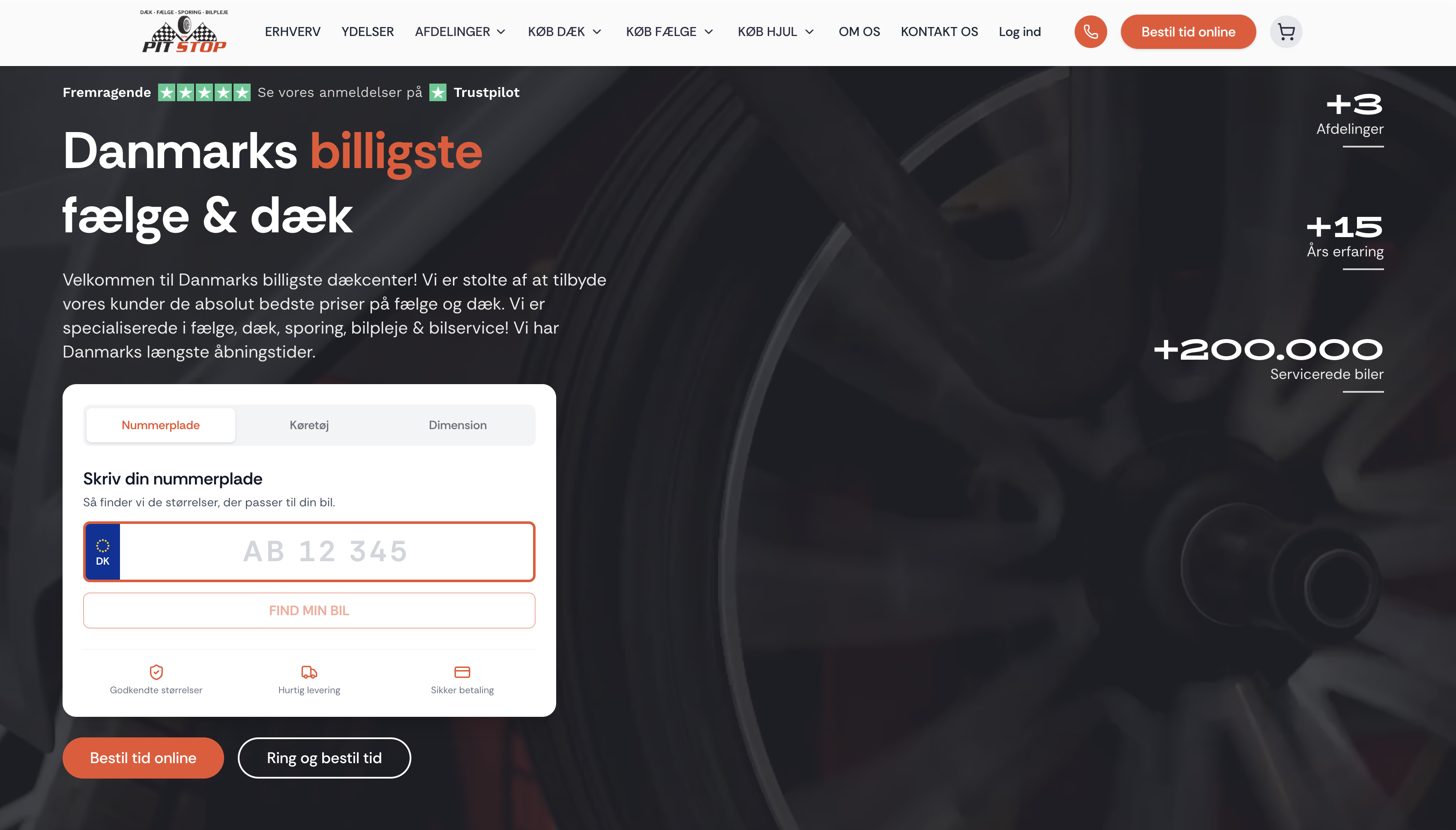
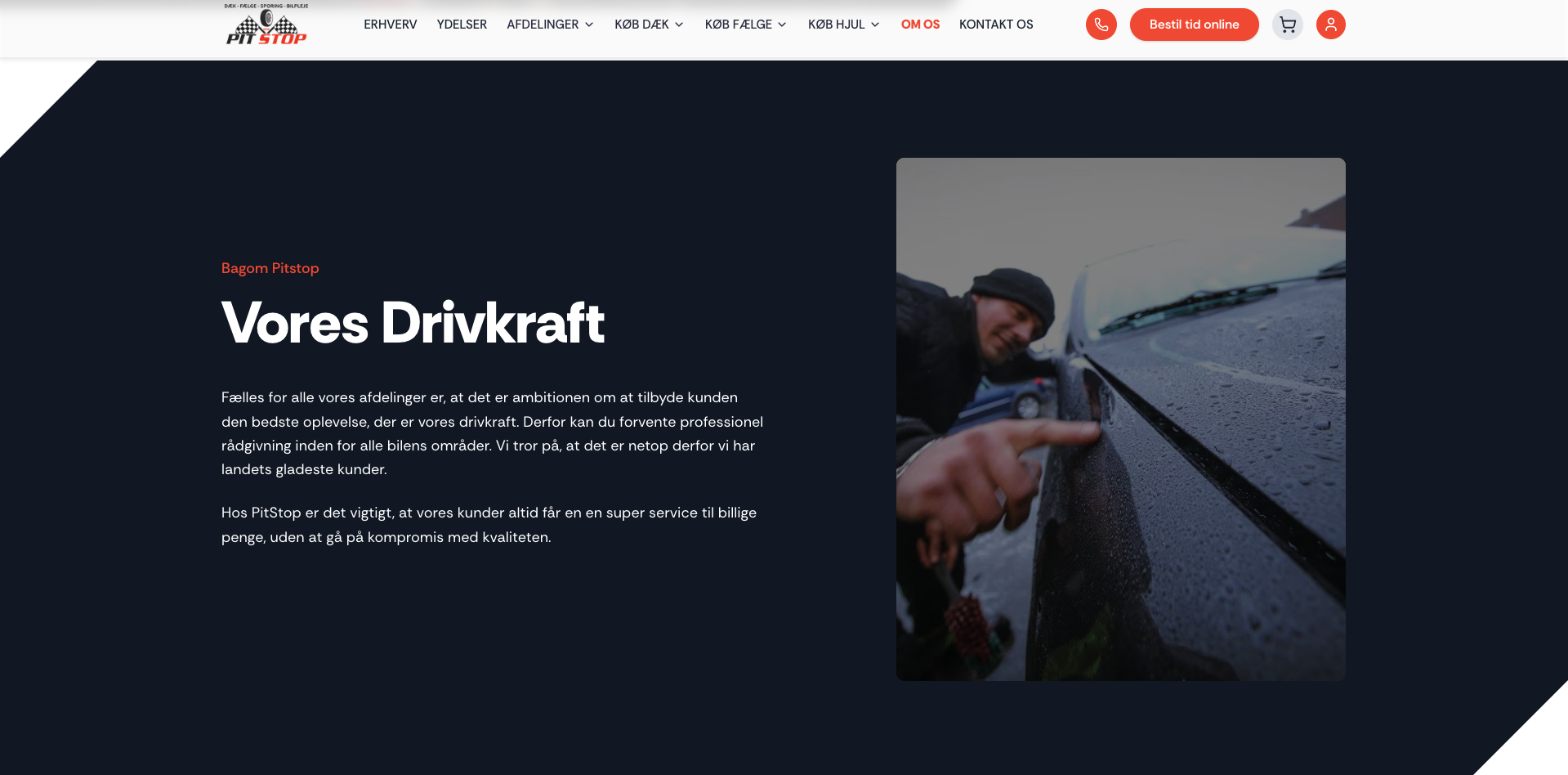
PitStop is one of the biggest tyre centres in the Copenhagen area, three branches, more than 15 years in the trade, over 200,000 cars serviced. We built the software on both sides of that business, the website that brings customers in and the inventory system the team runs on.
Our role
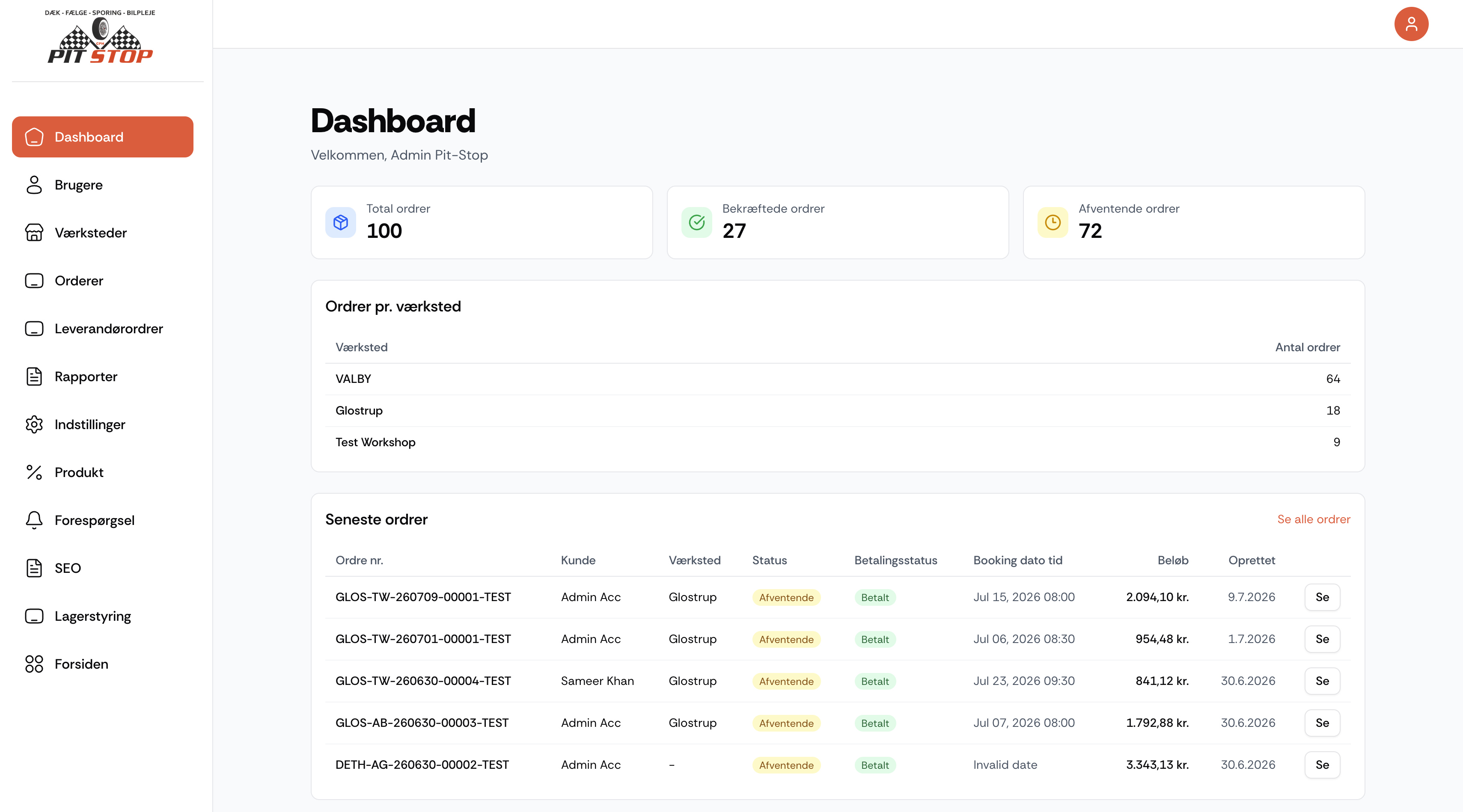
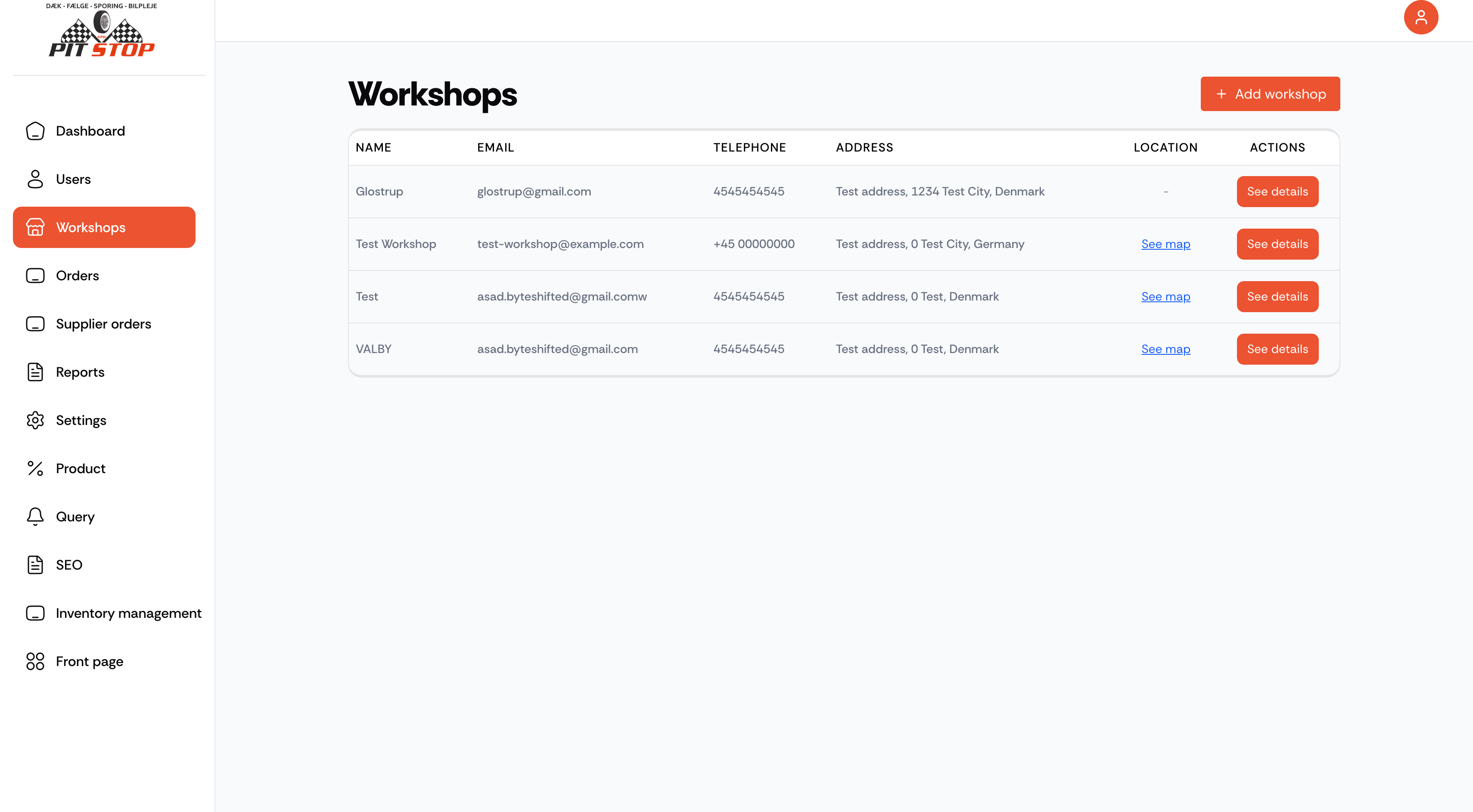
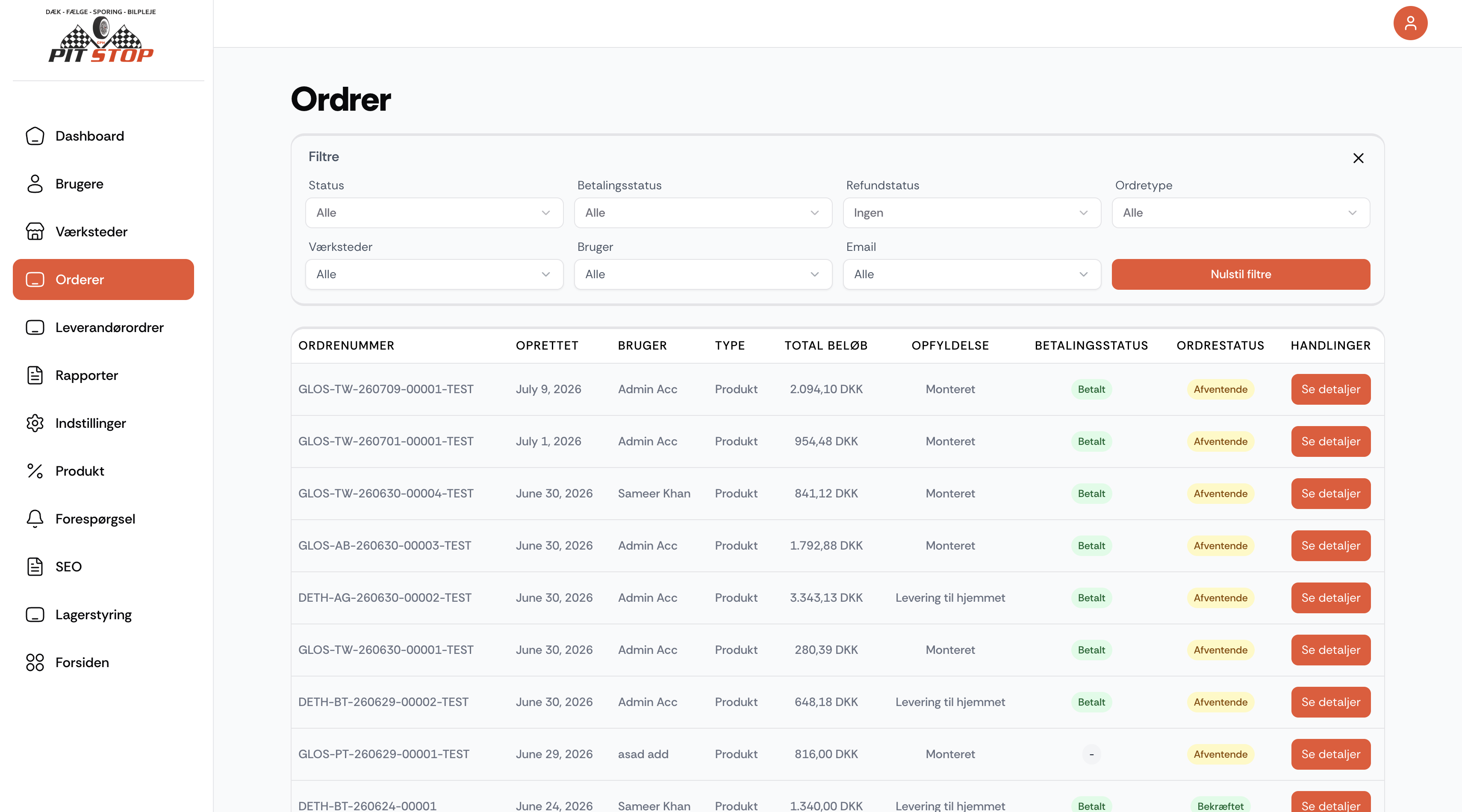
A tyre chain lives on local search, someone in Valby googling "dækcenter i Valby" the day they get a flat, and the way you win that is a real, dedicated page for every location and every service. So the heart of what we built is an admin panel the team uses to create those pages themselves. Each one is generated from a single template filled with a branch’s address, hours, services and local SEO copy, so spinning up a new page is a few minutes in the panel, not a developer job, and every page is built to rank.
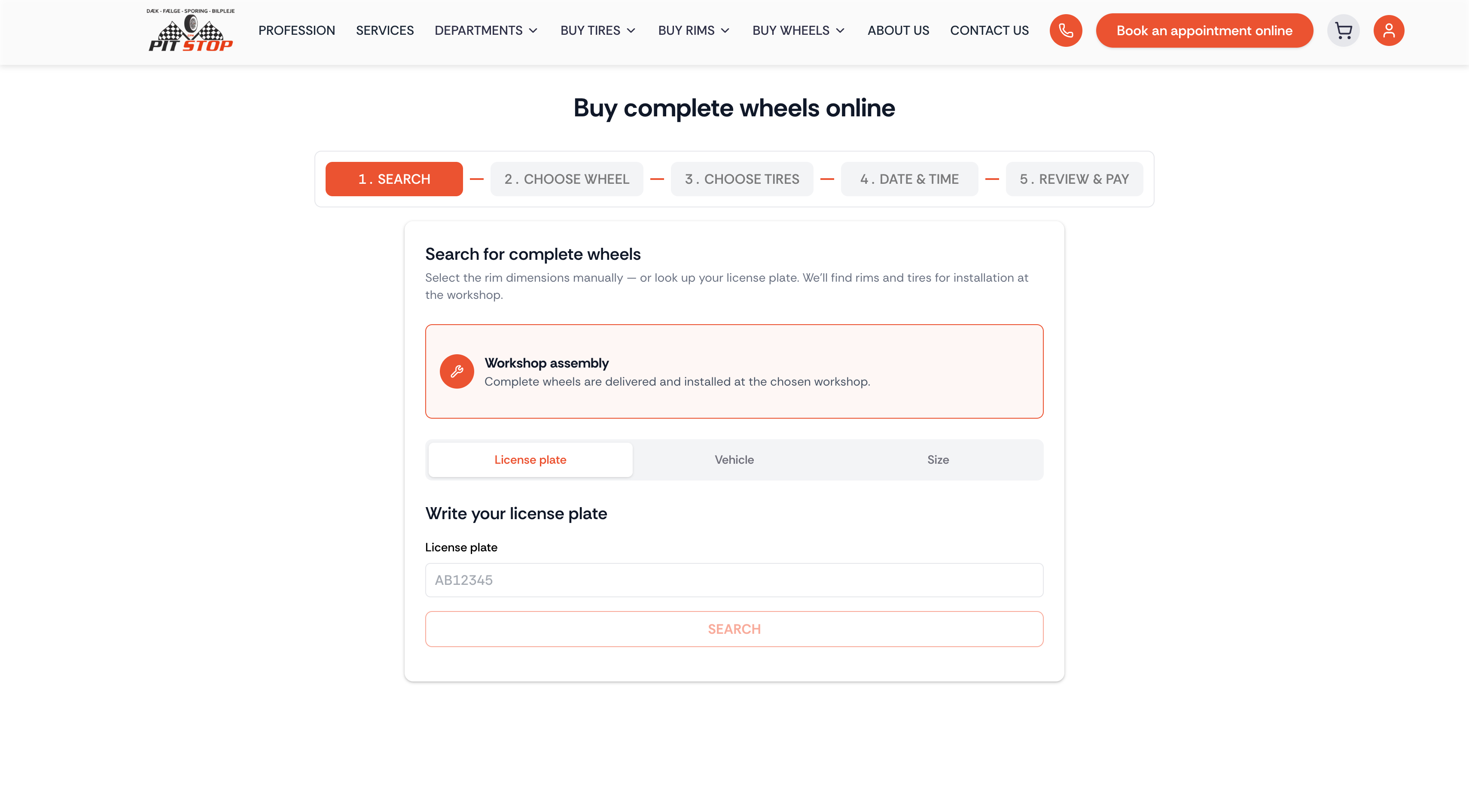
The same template thinking runs the shop, where customers browse and buy tyres, rims and wheels. Around it sits online booking, a drive-in message for walk-ins, and a callback form that routes the lead to the right branch. The team manages the content and catalogue that feed all of it from the same panel.
Behind the counter the harder problem was stock. We built PitStop a full inventory and warehouse management system, real-time stock across every branch, goods received, counted and moved through the platform, and integration with their suppliers’ systems so availability and pricing flow in instead of being re-keyed. What the website says is in stock and what is on the shelf stay in step.
The result is a tyre business that owns its own software end to end, a marketing site the team changes whenever they like, and an inventory they can see and source from in real time, instead of a brochure and a spreadsheet.
02 / The Challenge
A tyre chain lives on local search and moving stock. Winning three towns means a real page for every branch and service, which a static site turns into a developer ticket every time, and stock decisions were being made on yesterday’s numbers while real availability sat in suppliers’ systems.
03 / Our Approach
We gave the team the tools to run their own website and their own stock, so growth stops depending on a developer or a spreadsheet.
04 / What we built
Team-run website
An admin panel the team uses to spin up their own local landing pages.
Programmatic SEO pages
A real page per branch and service, built from one template to rank locally.
Tyre, rim & wheel shop
A storefront driven by the catalogue behind the panel.
Inventory & warehouse management
Live stock across branches, wired into suppliers.
Android warehouse scanning
Scanning that keeps the shelf honest to the last scan.
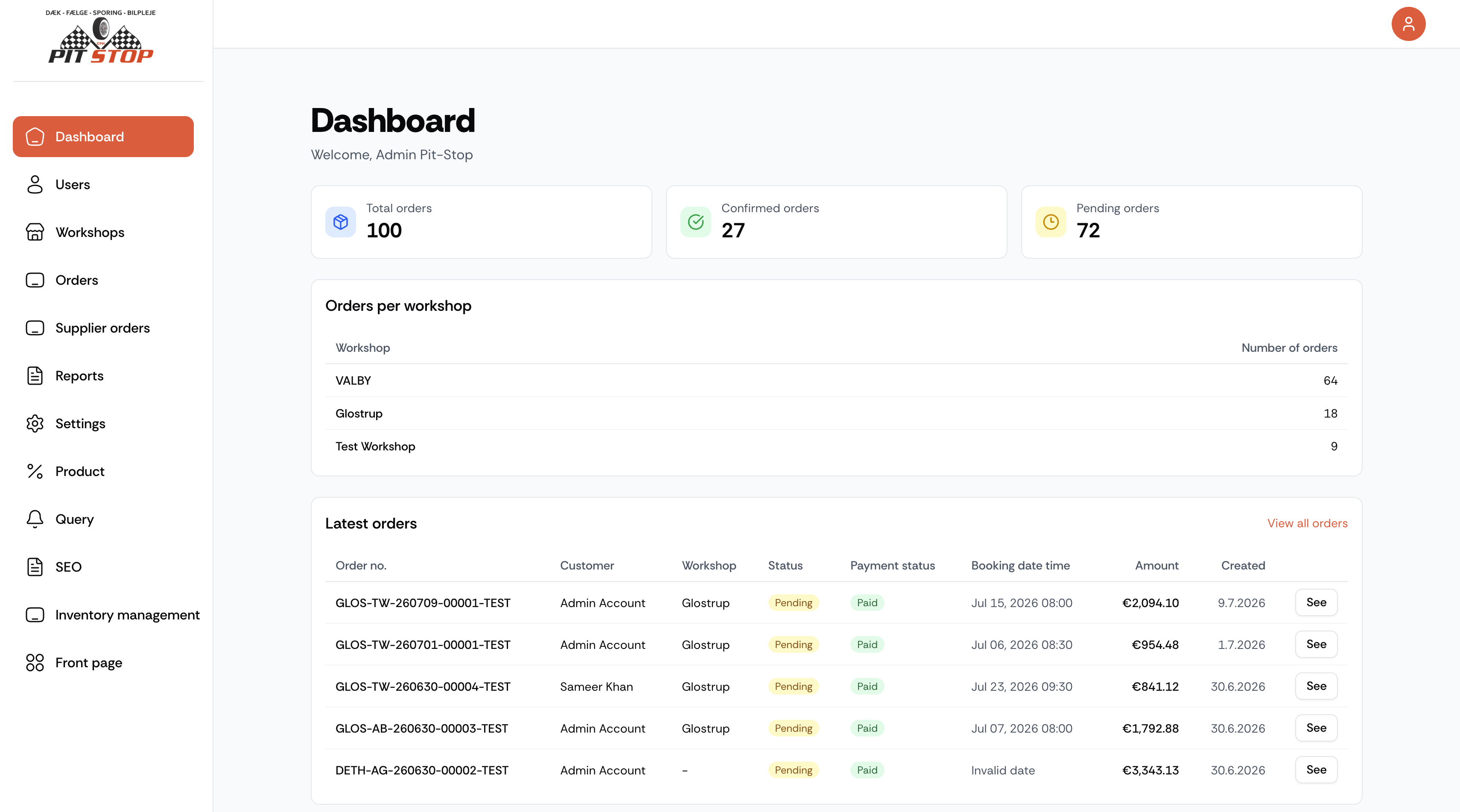
Admin panel
05 / Outcomes
3
Branches, each with its own landing page built to rank locally
200,000+
Cars serviced, the scale the platform now runs on
20,000+
Tyres and rims kept live in stock and online
Live
Inventory wired into suppliers in real time
Next case study
WinZone Poker→